
Strengthening Innovation and International Partnerships in Challenging Times: HEInnovate at Odessa National Economic University
by Natalia Nianchuk
Abstract: Odessa National Economic University used HEInnovate as a university-wide development tool and within the U!Innovate project to strengthen its approach to innovation and entrepreneurship. After participating in the Train the Trainers session in Berlin in June 2025, the methodology was introduced internally through workshops and a translated self-assessment. The results informed teaching innovations, the initiation of a business incubator, strategic planning using action cards, and expanded European partnerships, supporting long-term institutional development.
Could you share some background about your role and responsibilities at Odessa National Economic University?
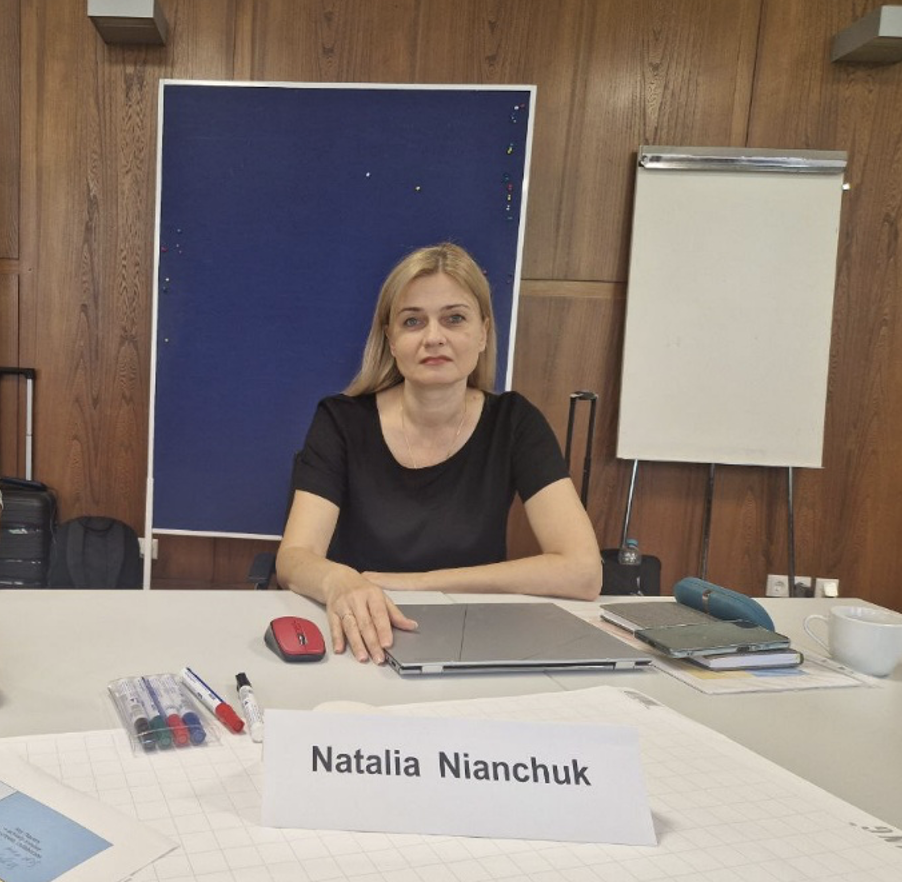
 I am an Associate Professor in the Department of Banking at Odessa National Economic University. Alongside my teaching and research responsibilities, I coordinate international cooperation according research activity within the U!REKA Alliance of European Universities.
I am also the project manager of the U!Innovate project funded under the European Institute of Innovation and Technology (EIT) Higher Education Initiative, which brings together higher education institutions and business partners to support climate-neutral and smart cities development. This role closely connects innovation, entrepreneurship, and European collaboration within our university’s strategic development.
How did you first engage with HEInnovate, and what role did the Train the Trainers session play?
My first engagement with HEInnovate took place during the U!Innovate application stage, when our university completed the self-assessment together with partner institutions. This introduced us to a structured framework for reflecting on innovation and entrepreneurship in higher education.
To strengthen our institutional use of the tool, I attended the HEInnovate Train the Trainers session in Berlin in June 2025. I was motivated by the opportunity to bring the methodology back to our university in a more practical and coordinated way. The training provided valuable guidance on implementation and enabled exchange with colleagues from other European universities.
How did you implement the HEInnovate methodology at your university?
After the training, I organised an introductory workshop for academic and non-academic staff and students, where I presented the HEInnovate framework and self-assessment methodology. To ensure accessibility, I translated the self-assessment into Ukrainian and shared it across different university groups. The collected responses were analysed and used to initiate a structured discussion about how innovation and entrepreneurship are perceived and implemented within our institution.
What were the most useful insights or discoveries from using HEInnovate?
HEInnovate was valuable in helping us structure reflection on innovation and entrepreneurship, particularly in areas where activities exist but are not always coordinated institution-wide. The eight-dimensional framework and action cards supported clearer identification of priorities for future development.
The self-assessment highlighted areas requiring further attention, including digitalisation, internationalisation, and resource constraints. It also revealed diverse and sometimes contradictory perceptions across different groups within the university, emphasising the importance of broad participation to strengthen the reliability of the results.
At the same time, reflection within the U!REKA Alliance allowed us to observe successful practices of partner institutions, which can inform and inspire further development at our university without relying on direct comparisons.
What concrete actions were taken at your university after using HEInnovate?
Following the self-assessment, Odessa National Economic University moved from reflection to implementation in several areas.
We introduced innovative teaching formats to foster an entrepreneurial mindset, including the creative contest “Business Economics: It’s Not a Fairy Tale,” where students reinterpret literary stories as business models, linking theory with practical entrepreneurial thinking.
Within the U!Innovate project, we initiated the development of a business incubator to support student start-ups and hands-on entrepreneurial activities. HEInnovate has also informed our strategic planning process, where we plan to use the action card methodology to engage academic staff, students, and external partners in defining priorities for strengthening our innovation ecosystem.
In addition, we expanded academic mobility through new bilateral agreements with HOGENT (Belgium) and the Amsterdam University of Applied Sciences (Netherlands), and we are preparing further partnerships with Metropolia University of Applied Sciences (Finland) and other European institutions.
What outcomes can you link to the HEInnovate experience, and how do you plan to continue this work?
HEInnovate has strengthened our understanding of innovation and entrepreneurship as structured institutional processes rather than isolated initiatives. It has supported deeper engagement within the U!Innovate project and improved our capacity to align internal development with European cooperation objectives.
We see HEInnovate as a longitudinal tool that can be repeated every one to two years to monitor progress and evaluate whether new policies and initiatives are delivering measurable change. The self-assessment process can also be embedded in curriculum updates and strategic reviews, ensuring that innovation and entrepreneurship remain integrated into academic development.
Even in conditions of uncertainty caused by war, HEInnovate provides a stable framework for evidence-based planning and adaptive decision-making, supporting continued international cooperation and innovation-oriented development.