
Building Innovation Capability through HEInnovate: The EIT DISCO Project Experience
by Lidia Gryszkiewicz, Stephanie Kaudela-Baum, Piotr Kopyciński, Marek Oramus
Abstract: Through the DISCO project, institutions from Poland, Switzerland, and Ukraine used HEInnovate as a shared reflection and action-planning tool to strengthen their innovation capacity in a complex and rapidly changing environment. By combining self-assessment, peer learning, and practical experimentation, HEInnovate supported institutional development across areas such as entrepreneurship support, internationalisation, organisational capacity, and leadership. This testimonial reflects on how HEInnovate helped translate reflection into meaningful action and long-term capability building.
Could you briefly introduce yourselves and the context in which you used HEInnovate?
 We represent a group of higher education institutions and innovation partners that collaborated within the DISCO project, implemented between 2022 and 2024 and funded under the European Institute of Innovation and Technology (EIT) Higher Education Initiative. DISCO stands for Developing Innovative Sustainable Cooperation Opportunities. The project brought together universities from Poland, Switzerland, and Ukraine, alongside Limitless, a Luxembourg-based innovation consultancy partner, specialising in innovation capacity development, with the aim of strengthening institutional innovation capacity through shared learning and cooperation. From the very beginning, HEInnovate played an important role by helping us structure our reflections, understand our starting points, and guide collaboration across very different institutional and national contexts.
What type of HEInnovate activity did you take part in, and who was involved?
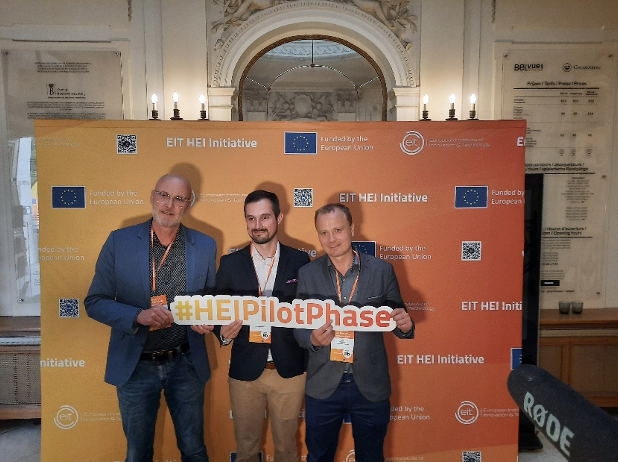
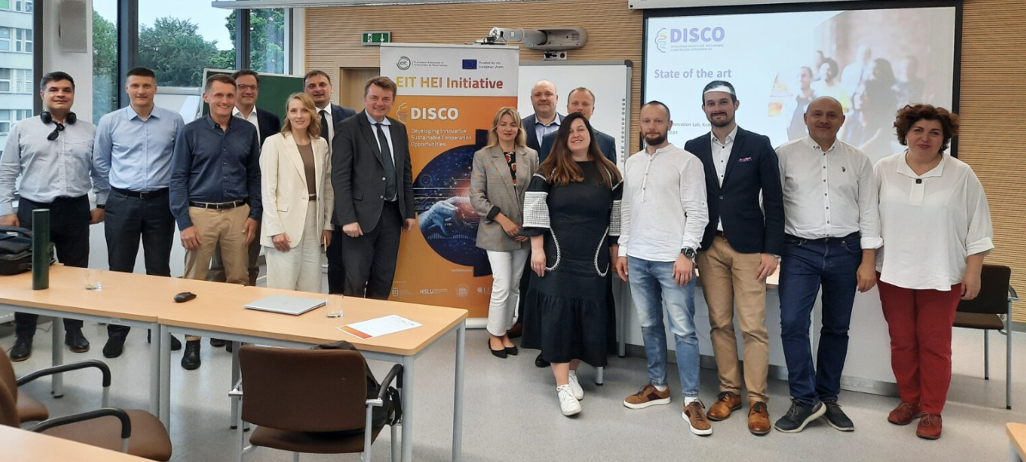
We engaged with HEInnovate primarily through the self-assessment, which we conducted at two key moments: during the proposal preparation phase and again at the end of the project. In addition, HEInnovate served as a reference framework throughout the project for workshops, innovation labs, bootcamps, and leadership discussions. The process involved academic staff, innovation and entrepreneurship units, project teams, and institutional leadership. In several cases, students and administrative staff also contributed, which helped ensure that the assessment reflected institutional realities rather than individual perspectives.
What were the most useful or valuable aspects of working with HEInnovate?
One of the greatest strengths of HEInnovate was that it gave us a shared language to talk about innovation across very different institutions. It allowed us to identify strengths, gaps, and priorities in a structured way, particularly in areas such as organisational capacity, preparing and supporting entrepreneurs, knowledge exchange and collaboration, internationalisation, and measuring impact. Equally important was the fact that HEInnovate encouraged honest reflection. The value of the tool was not in the scores themselves, but in the discussions that they triggered, and the clarity they brought to our decision-making.
Did HEInnovate help you identify challenges or areas for improvement?
Yes, very clearly. The self-assessment showed that our institutions started from different baselines. Some were already operating at a high level of innovation maturity, while others were facing more structural challenges, intensified in some cases by external instability. HEInnovate helped us recognise these differences openly and turn them into opportunities for peer learning, rather than treating them as obstacles.
What actions did you take following the HEInnovate self-assessment?
Based on the insights gained, we implemented a range of actions across the consortium. These included innovation labs, entrepreneurship and innovation trainings, international bootcamps, and the development of digital learning formats such as MOOCs (Massive Open Online Courses). We also strengthened student start-up centres, coaching and mentoring practices, and international networking activities. HEInnovate helped us ensure that these actions were aligned with identified institutional needs, rather than isolated or ad hoc initiatives.
What outcomes or changes can you link directly to HEInnovate?
By the end of the project, all participating institutions showed measurable progress across several HEInnovate dimensions. Beyond the self-assessment results, we observed tangible outcomes such as the creation and development of start-ups, stronger cross-border networks, and improved institutional collaboration capacities. HEInnovate also supported a shift in mindset – from focusing on individual innovation activities to building long-term innovation capability.
What were the main lessons learned from this experience?
One key lesson was that innovation in higher education is closely linked to leadership, culture, and institutional structures. HEInnovate helped us better understand and navigate the tensions inherent in entrepreneurial universities, such as balancing stability and experimentation or local priorities and international collaboration. Another important lesson was the value of involving a broad group of stakeholders in the self-assessment process, which helped reduce bias and increased ownership of the results.
How do you plan to use HEInnovate in the future?
We see HEInnovate as an ongoing reflection and development tool rather than a one-time exercise. Going forward, it will continue to support strategic discussions, leadership development, and institutional learning in the areas of innovation and entrepreneurship. Our experience shows that when used openly and collectively, HEInnovate can become a powerful driver of sustainable change within higher education institutions.
Full paper available: Knowledge-sharing networks of higher education institutions for innovation and entrepreneurship: Evidence from the “DISCO” project case study