
Alte University: Building Interdisciplinary Collaboration through HEInnovate
by Tornike Bakakuri
Abstract: Alte University used the HEInnovate self-assessment to identify strengths and gaps in Innovation & Entrepreneurship. The process, endorsed by university leadership and involving key stakeholders across the institution, highlighted fragmented activity despite clear strategic ambitions. In response, Alte University prioritised cross-unit collaboration, delivered the HEInnovate Train the Trainer resources to the newly launched Innovation and Entrepreneurship Centre, and began developing a dashboard to track progress using internationalisation and Innovation & Entrepreneurship indicators on school/department level. Going forward, Alte University plans to repeat the HEInnovate self-assessment to support continuous institutional improvement.
Could you share the background about your role and responsibilities at Alte University?
 I am the Head of International Relations at Alte University in Georgia, where I lead the university’s internationalisation activities and strengthen cooperation across departments. Despite being a relatively small institution, we have achieved measurable growth in international engagement in the last couple of years.
My academic background is in psychology and social research, and I am currently pursuing a joint PhD in education and science governance at Ivane Javakhishvili Tbilisi State University (Georgia) and National and Kapodistrian University of Athens (Greece). Before joining Alte University, I worked at the National Quality Assurance Agency (NCEQE) in Georgia and was also involved in the Bologna Follow-up Working Group on the Social Dimension in Higher Education. These experiences have shaped how I approach quality development and institutional change at Alte University.
How did Alte University become involved with HEInnovate?
Our engagement with HEInnovate began through an application for the EIT Higher Education Initiative 2024, which required us to conduct a self-assessment for institutional review. This initial experience introduced us to the HEInnovate tool and encouraged further use within Alte University.
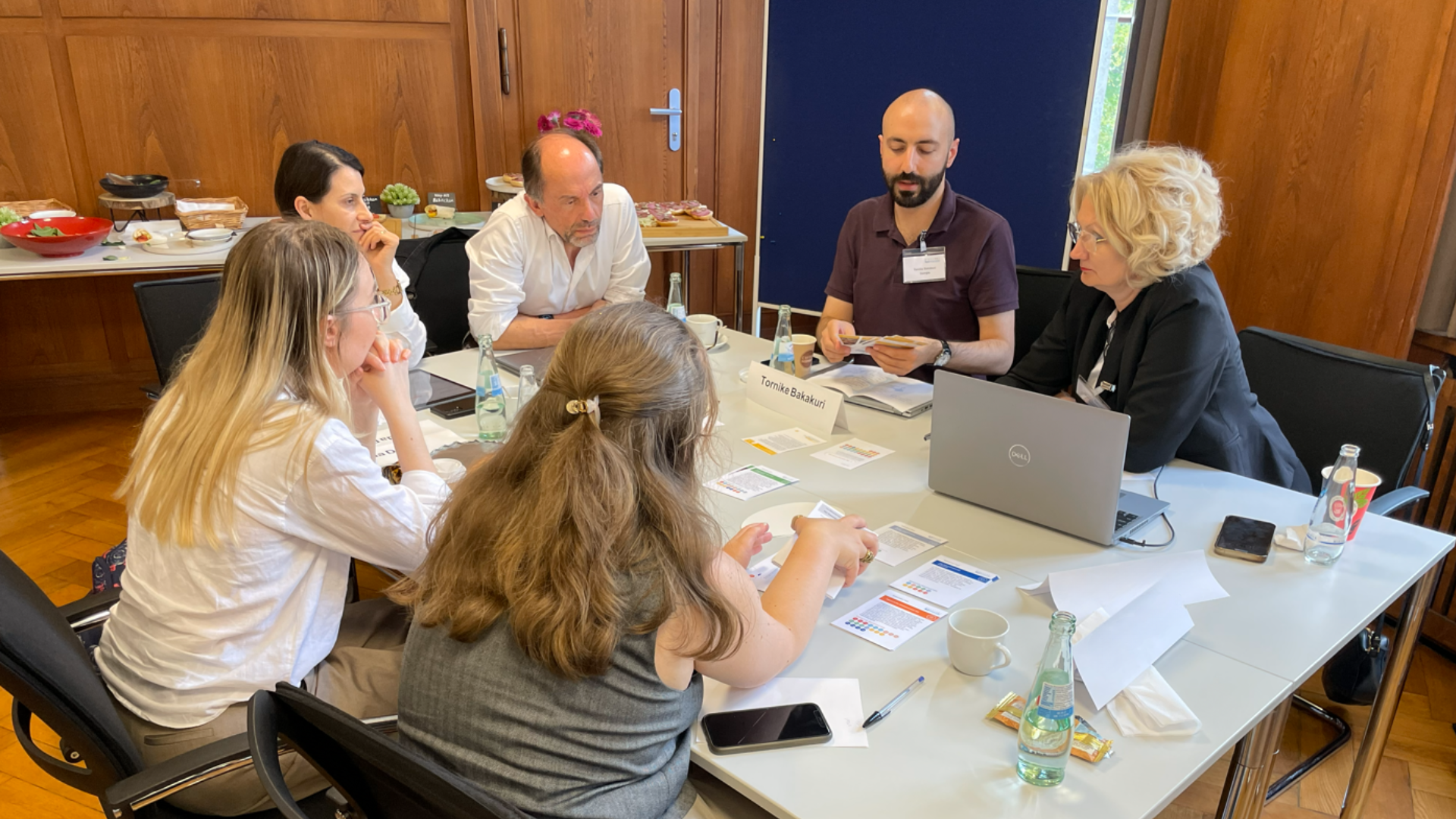
In June 2025, I participated in the HEInnovate Train the Trainers Session in Berlin (Germany), which I found particularly inspiring. The diversity of participants and the range of innovation and entrepreneurship contexts discussed made it a valuable learning experience. Since then, I have actively shared HEInnovate webinars and materials with colleagues and students at Alte University, promoting them as free, high-quality development opportunities.
How did you translate the HEInnovate findings into concrete development activities?
We conducted the self-assessment with representatives from across Alte University — including deans, Vice Presidents, the Head of Quality Assurance, the Head of Research Support and Project Development. The process was endorsed by the president of Alte University, ensuring strong institutional backing.
The results revealed that, although Alte University had strategic goals for innovation and entrepreneurship, activities, while tangible, were often scattered and lacked a multi-stakeholder and structured framework. At the same time, internationalisation could serve as an additional unifying and boosting layer. This finding led us to prioritise interdisciplinary collaboration and coordinated development initiatives.
Following the self-assessment, the International Relations Department at Alte University began focusing on projects that promote cross-unit collaboration between academic and administrative departments, while also building stronger partnerships with industry and international actors. This includes for example applying for multilateral capacity building projects with business and civil society partners in Capacity Building in Higher Education consortia, hosting international camps and hackathons under global umbrella foundations such as NASA and the World Bank, and organising our first international staff week for a mixed group of academic and administrative colleagues from partner institutions.
What were the main lessons learned from using HEInnovate?
The HEInnovate self-assessment process sparked important institutional discussions and helped us identify gaps that might otherwise have gone unnoticed. Interpreting the results required careful analysis, as the interconnections between the assessment dimensions encouraged us to think more deeply about our next steps.
We decided that the Innovation & Entrepreneurship Centre at Alte University would take ownership of implementing the tool, with the support of our department in providing training materials and aligning efforts with the Vice Presidents responsible for Research and Academic Affairs, as well as the third mission of the university. This shared responsibility ensures the tool remains embedded in our institutional processes.
How do you plan to use HEInnovate in the future to support development at Alte University?
We have agreed to expand the self-assessment to the school/academic department level, developing specific indicators based on the HEInnovate dimension “The Internationalised Institution”, while innovation area indicators have already been implemented in our internal quality assurance matrix. A dashboard to track results will be completed by the end of 2025, allowing us to see gaps across certain innovation and internationalisation areas and plan necessary actions for the further development of our programs.
Looking ahead, we plan to repeat the HEInnovate self-assessment in January 2026 and use the findings to guide further development. For our Innovation & Entrepreneurship Centre, the results will support training initiatives for teaching staff in innovative methodologies, coordinating it with our Human Development Department, which in turn serves as the Erasmus+ PROFFORMANCE ambassador for teaching excellence.
The process has already contributed to a stronger culture of collaboration and continuous improvement within Alte University. HEInnovate has not only helped us identify areas for growth but has also strengthened collaboration across disciplines and departments at Alte University.